

Introduction
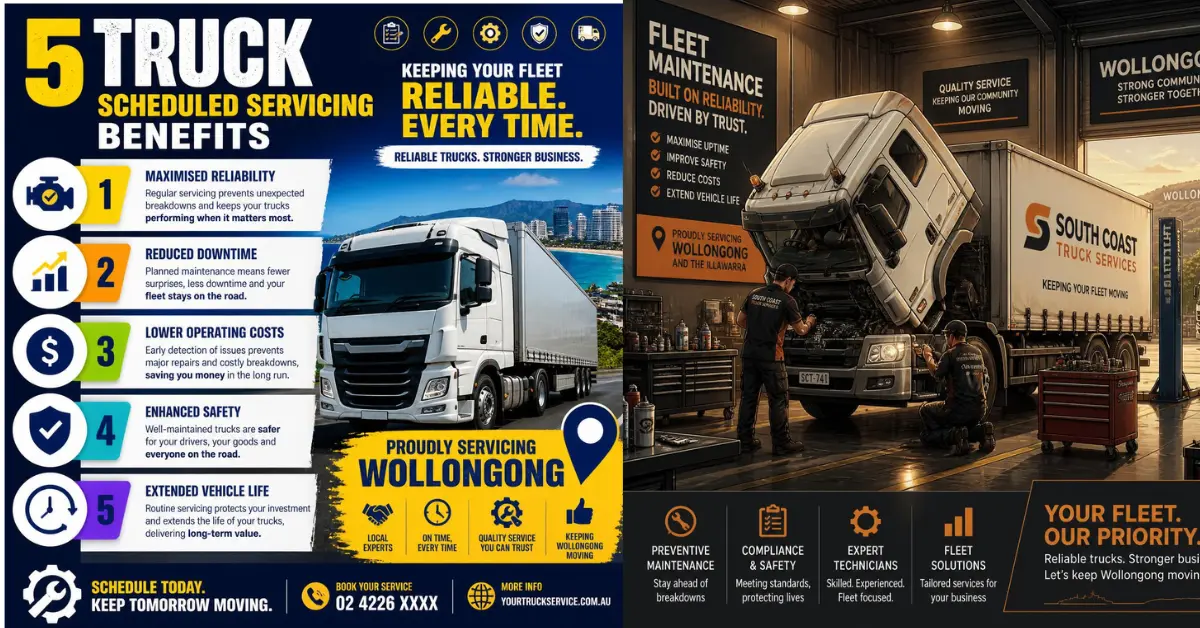
Truck scheduled servicing Wollongong is one of the most effective ways to keep heavy vehicles safe, reliable, and roadworthy throughout the year. Whether you manage a single commercial truck or an entire fleet, following a scheduled maintenance plan reduces unexpected breakdowns, improves fuel efficiency, and helps extend the life of critical components.
Regular servicing is more than just changing engine oil. It includes inspecting brakes, suspension, steering, tyres, electrical systems, cooling systems, and other essential parts that keep trucks operating efficiently. For businesses that rely on transport, preventive servicing also minimizes costly downtime and supports compliance with heavy vehicle safety requirements.
This guide explains everything you need to know about truck scheduled servicing Wollongong, including its benefits, servicing intervals, essential maintenance tasks, common mistakes, practical tips, and frequently asked questions. Choosing truck scheduled servicing Wollongong helps businesses reduce breakdowns, improve reliability, and extend the lifespan of heavy vehicles.
What Is Truck Scheduled Servicing Wollongong?
Truck scheduled servicing Wollongong refers to planned maintenance performed at recommended mileage or time intervals instead of waiting until a mechanical problem occurs.
Rather than repairing damaged components after failure, scheduled servicing focuses on preventing issues before they become expensive repairs.
Truck scheduled servicing Wollongong
- Engine oil replacement
- Oil and fuel filter replacement
- Brake inspection
- Suspension check
- Steering inspection
- Tyre condition assessment
- Cooling system inspection
- Battery testing
- Transmission inspection
- Differential checks
- Electrical system testing
- Safety inspection
Following a servicing schedule helps maintain vehicle reliability while reducing unexpected repair costs.
Why Scheduled Truck Servicing Matters
Heavy trucks operate under demanding conditions every day.
They often carry heavy loads, travel long distances, and experience constant vibration, heat, and wear.
Ignoring routine servicing can lead to:
- Engine damage
- Brake failure
- Overheating
- Reduced fuel economy
- Costly emergency repairs
- Vehicle downtime
- Safety risks
Preventive maintenance identifies wear before it becomes a major problem.
Benefits of Truck Scheduled Servicing Wollongong
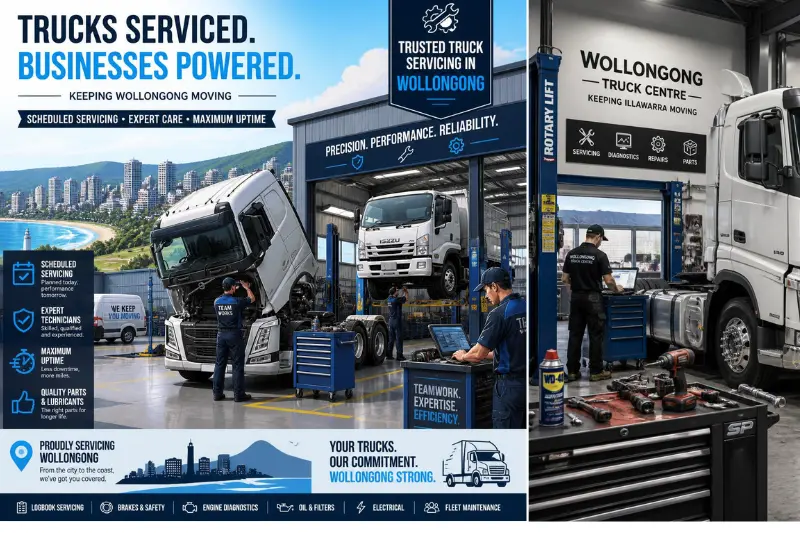
Businesses that invest in regular servicing often experience significant long-term advantages.
Improved Reliability
Routine servicing reduces unexpected mechanical failures.
Drivers can operate with greater confidence knowing that major systems have been inspected and maintained.
Longer Engine Life
Fresh oil, clean filters, and proper lubrication reduce internal engine wear.
A well-maintained diesel engine can remain reliable for many years with consistent servicing.
Better Fuel Efficiency
Dirty filters, worn injectors, incorrect tyre pressure, and poor engine performance increase fuel consumption.
Regular maintenance keeps fuel efficiency at its best.
Reduced Repair Costs
Minor issues are much cheaper to repair than complete component failures.
Replacing a worn belt is significantly less expensive than repairing an engine damaged after the belt snaps.
Increased Safety
Routine inspections ensure critical safety systems remain in excellent condition.
These include:
- Brakes
- Steering
- Suspension
- Lights
- Tyres
Higher Vehicle Resale Value
A truck with documented service records is generally more attractive to future buyers.
Regular maintenance demonstrates responsible ownership. Investing in truck scheduled servicing Wollongong provides long-term savings and keeps commercial trucks operating efficiently.
What Does Scheduled Truck Servicing Include?
Although service requirements vary by manufacturer, most scheduled services include the following inspections.
Engine Service
Engine servicing commonly includes:
- Engine oil replacement
- Oil filter replacement
- Fuel filter replacement
- Air filter inspection
- Belt inspection
- Leak inspection
These tasks help maintain engine performance.
Brake Inspection
Brake servicing usually includes checking:
- Brake pads
- Brake shoes
- Brake discs
- Brake drums
- Air brake systems
- Brake fluid
Reliable braking is essential for heavy commercial vehicles.
Cooling System Inspection
The cooling system prevents overheating.
Technicians inspect:
- Coolant
- Radiator
- Water pump
- Thermostat
- Hoses
- Cooling fans
Suspension Inspection
Suspension components absorb road impacts and support heavy loads.
Common inspections include:
- Shock absorbers
- Springs
- Bushings
- Air suspension
- Mounting points
Steering Inspection
Proper steering improves vehicle control.
Service technicians inspect:
- Steering box
- Tie rods
- Ball joints
- Power steering system
Tyre Inspection
Tyres are checked for:
- Wear patterns
- Damage
- Pressure
- Alignment issues
- Tread depth
Uneven tyre wear often indicates suspension or alignment problems.
Electrical System Check
Electrical inspections include:
- Battery testing
- Alternator testing
- Starter motor
- Lighting
- Wiring
- Charging system
Recommended Truck Service Intervals
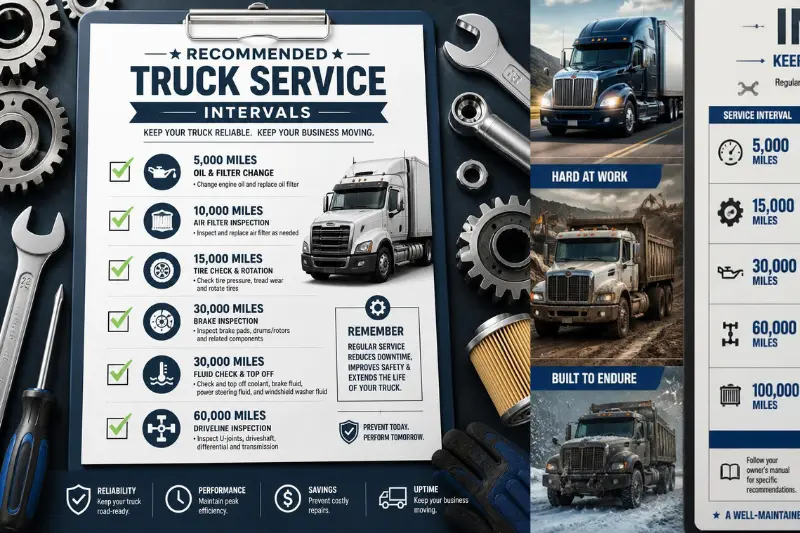
Truck servicing depends on several factors.
These include:
- Manufacturer recommendations
- Driving conditions
- Load weight
- Distance travelled
- Fleet usage
Typical servicing intervals include:
| Service Type | Typical Interval |
|---|---|
| Basic Inspection | Weekly |
| Minor Service | Every 10,000–15,000 km |
| Standard Service | Every 20,000–30,000 km |
| Major Service | Every 50,000–100,000 km |
Always follow the manufacturer’s maintenance schedule for the specific truck model. A professional truck scheduled servicing Wollongong plan should always follow the manufacturer’s recommended maintenance schedule.
Signs Your Truck Needs Immediate Servicing
Do not wait for the next scheduled service if you notice warning signs.
Common indicators include:
- Engine warning light
- Brake warning light
- Poor fuel economy
- Engine overheating
- Unusual smoke
- Hard starting
- Fluid leaks
- Vibration
- Grinding noises
- Reduced power
- Steering problems
Prompt servicing can prevent more serious damage.
Scheduled Servicing vs Emergency Repairs
| Scheduled Servicing | Emergency Repairs |
|---|---|
| Planned maintenance | Unexpected breakdown |
| Lower repair costs | Expensive repairs |
| Less downtime | Long vehicle downtime |
| Improved reliability | Operational disruption |
| Better fuel economy | Reduced efficiency |
| Increased safety | Higher safety risks |
Preventive maintenance is generally more cost-effective than reactive repairs.
How Professional Mechanics Perform Scheduled Servicing
Professional servicing follows a structured process.
Step 1
Inspect the truck for visible damage.
Step 2
Review previous maintenance records.
Step 3
Perform diagnostic testing where required.
Step 4
Replace worn fluids and filters.
Step 5
Inspect mechanical systems.
Step 6
Repair or replace damaged components.
Step 7
Test the vehicle after servicing.
Step 8
Record completed maintenance for future reference.Professional workshops offering truck scheduled servicing Wollongong use detailed inspection procedures to maintain vehicle safety and performance.
Common Components Replaced During Scheduled Service
Depending on mileage, technicians may replace:
- Engine oil
- Oil filter
- Fuel filter
- Air filter
- Cabin filter
- Coolant
- Drive belts
- Brake pads
- Wiper blades
- Transmission fluid
- Differential oil
Replacing worn consumable parts improves reliability.
Common Mistakes Truck Owners Make
Many costly repairs result from avoidable maintenance mistakes.
Common examples include:
- Delaying oil changes
- Ignoring warning lights
- Skipping brake inspections
- Using incorrect engine oil
- Forgetting coolant replacement
- Ignoring tyre pressure
- Missing service records
- Waiting until something breaks
Preventive maintenance is always less expensive than major repairs.
Tips to Extend Truck Life
Simple habits can greatly improve truck reliability.
- Follow scheduled servicing intervals.
- Check fluid levels regularly.
- Maintain correct tyre pressure.
- Avoid overloading.
- Repair leaks immediately.
- Replace worn filters.
- Warm the engine before heavy operation.
- Keep maintenance records.
- Inspect brakes frequently.
- Address unusual noises quickly.
Is Scheduled Servicing Worth the Investment?
For most commercial operators, the answer is yes.
Although routine servicing has ongoing costs, it helps prevent expensive engine repairs, transmission failures, and unexpected roadside breakdowns. It also improves safety, fuel efficiency, and long-term vehicle performance, making it a practical investment for owner-operators and fleet businesses.
Choosing the Right Truck Service Provider
Selecting a qualified service provider can make a significant difference in vehicle reliability.
Look for workshops that offer:
- Experienced diesel technicians
- Modern diagnostic equipment
- Preventive maintenance programs
- Genuine or high-quality replacement parts
- Transparent service reports
- Fleet servicing options
- Emergency repair support
A reliable workshop should clearly explain recommended repairs and provide detailed maintenance records.
How Scheduled Servicing Reduces Fleet Operating Costs
For businesses that operate multiple trucks, scheduled servicing is one of the most effective ways to control operating expenses. Preventive maintenance helps identify minor issues before they become major mechanical failures that require expensive repairs.
Routine servicing also reduces unexpected downtime. When trucks spend less time in the workshop due to emergency repairs, they spend more time on the road completing deliveries and generating revenue. Fleet managers can also plan maintenance during quieter periods, minimizing disruptions to daily operations.
Some key cost-saving benefits include:
- Lower repair bills
- Improved fuel efficiency
- Reduced tyre wear
- Longer engine life
- Better vehicle reliability
- Fewer roadside breakdowns
- Higher resale value
Although scheduled maintenance requires regular investment, it usually costs far less than replacing major components such as engines, gearboxes, or differentials. Businesses that invest in truck scheduled servicing Wollongong often experience fewer unexpected repairs and lower operating costs.
Seasonal Truck Maintenance Tips
Weather conditions can affect truck performance throughout the year. Seasonal maintenance helps ensure your vehicle remains safe and reliable in changing conditions.
Summer Maintenance
During warmer months, technicians should pay extra attention to the cooling system.
Important checks include:
- Coolant levels
- Radiator condition
- Fan operation
- Air conditioning performance
- Battery health
Overheating is one of the most common causes of roadside breakdowns during hot weather.
Winter Maintenance
Cold weather can place additional stress on truck components.
Recommended inspections include:
- Battery testing
- Heater operation
- Tyre tread depth
- Windscreen wipers
- Lights and electrical systems
Drivers should also check tyre pressures regularly, as temperature changes can affect inflation.
Digital Maintenance Records Improve Fleet Management
Modern workshops increasingly use digital service records instead of paper logbooks. Electronic maintenance records make it easier to track servicing history, schedule future inspections, and monitor repair costs.
Benefits of digital maintenance records include:
- Easy access to previous service history
- Better warranty documentation
- Improved fleet planning
- Faster diagnosis of recurring issues
- Accurate maintenance reminders
Fleet managers can quickly identify vehicles due for servicing and avoid missing important maintenance intervals.Digital records also help schedule truck scheduled servicing Wollongong at the right intervals without missing important maintenance dates.
Why Genuine Parts Matter During Scheduled Servicing
Using high-quality replacement parts plays an important role in truck reliability. Genuine or manufacturer-approved components are designed to meet the correct specifications for heavy commercial vehicles.
Quality parts often provide:
- Better durability
- Improved performance
- Greater reliability
- Longer service life
- Better compatibility
Although cheaper aftermarket parts may reduce initial costs, they can sometimes wear out more quickly or fail to meet manufacturer standards. Choosing trusted replacement parts helps protect the overall performance and safety of the vehicle.
Internal Linking Opportunity
If you’re looking for complete heavy vehicle maintenance solutions, you can also explore our Truck Repairs Wollongong, Mobile Truck Mechanic Wollongong, Diesel Mechanic Wollongong, Heavy Vehicle Servicing Wollongong, and Truck Diagnostics Wollongong services to keep your fleet running safely and efficiently.
External Reference
For official guidance on heavy vehicle maintenance, safety standards, and compliance, visit the National Heavy Vehicle Regulator (NHVR). The NHVR provides trusted information for truck owners, fleet operators, and commercial drivers.
Frequently Asked Questions
1. How often should a truck receive scheduled servicing?
Most trucks require servicing every 10,000 to 30,000 kilometres, depending on manufacturer recommendations, operating conditions, and load capacity. Fleet vehicles operating in demanding environments may require more frequent inspections and maintenance.
2. What happens during a scheduled truck service?
A scheduled service usually includes changing engine oil and filters, inspecting brakes, tyres, steering, suspension, cooling systems, electrical components, and checking for leaks or worn parts that require replacement before they fail.
3. Does scheduled servicing improve fuel efficiency?
Yes. Clean filters, fresh engine oil, correct tyre pressure, and properly functioning engine components help reduce fuel consumption while improving overall vehicle performance and reliability.
4. Can scheduled servicing prevent major repairs?
Regular maintenance identifies worn components before they fail. Replacing small parts early can help avoid expensive engine, transmission, or brake repairs while reducing unexpected vehicle downtime.
5. Why is keeping service records important?
Accurate maintenance records demonstrate that the truck has been properly maintained. They also help diagnose recurring issues, support warranty requirements, and increase resale value when selling the vehicle.
Conclusion
Truck scheduled servicing Wollongong is one of the smartest ways to protect your investment and maintain safe, dependable fleet operations. Truck scheduled servicing Wollongong is an essential investment for fleet owners who want reliable performance, lower maintenance costs, and improved road safety. Routine inspections, timely oil changes, brake checks, and preventive maintenance reduce breakdown risks while improving fuel efficiency and extending the life of essential components.
Whether you operate a single truck or manage an entire fleet, following a structured maintenance schedule helps lower long-term operating costs and keeps your vehicles ready for the road. Consistent servicing today can prevent expensive repairs and unnecessary downtime in the future.Book your next truck scheduled servicing Wollongong with a trusted workshop to keep your truck running at its best.
